
Draft Master Plan Status of Kurali: What Property Buyers & Investors Need to Know
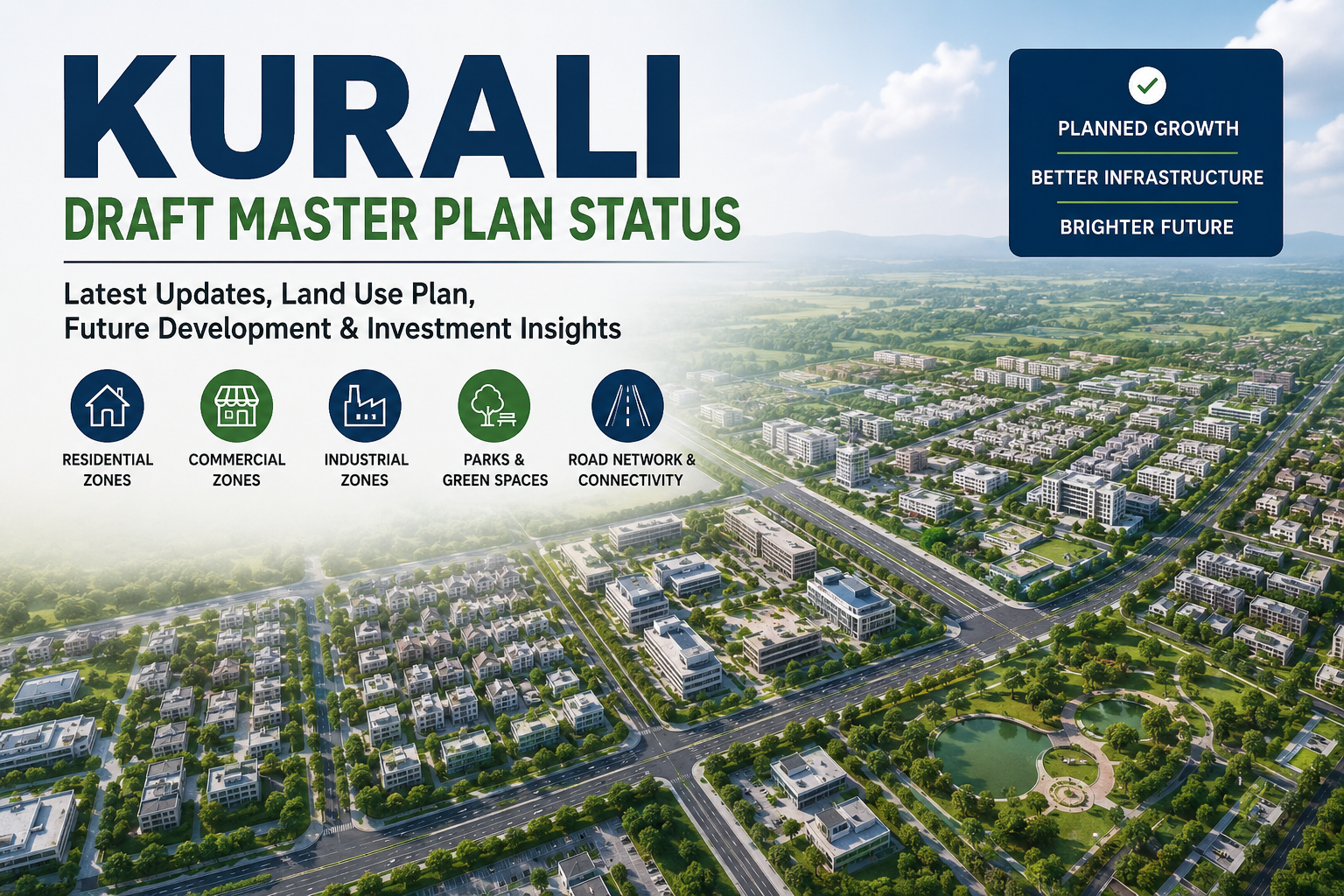
Introduction
Kurali, located in the SAS Nagar (Mohali) district of Punjab, has emerged as an important growth corridor due to its strategic location near Chandigarh, New Chandigarh, Mohali, and Kharar. As urban development continues to expand across the Tricity region, planned development has become essential for managing future growth.
The Draft Master Plan of Kurali is an important planning document that outlines the proposed land use, transportation network, public infrastructure, and future development strategy for the town. Although it provides a vision for urban expansion, it is important to understand that a draft master plan is a proposed planning document and may be revised before final approval by the competent authority.
This article explains the current status of the Draft Master Plan, its objectives, and what it means for property owners, buyers, and investors.
What is a Draft Master Plan?
A Draft Master Plan is a preliminary planning document prepared by the planning authority to guide the future development of a city or town. Before becoming legally enforceable, the draft is released for public review, allowing stakeholders—including residents, landowners, developers, and government departments—to examine the proposals and submit objections or suggestions within the prescribed period.
After reviewing public feedback, the authority may modify the proposals before issuing the final approved Master Plan.
Current Status of the Draft Master Plan
The Draft Master Plan for Kurali represents the government’s proposed vision for the town’s future growth. It identifies areas that may be developed for:
- Residential neighbourhoods
- Commercial activities
- Industrial development
- Institutional facilities
- Transportation infrastructure
- Public utilities
- Parks and green spaces
Since it is a draft document, the proposed land-use designations and development proposals should not be treated as final until officially approved and notified by the competent authority.
Property buyers and investors should always verify the latest planning status through the relevant government department before making any purchase or investment decision.
Objectives of the Draft Master Plan
The Draft Master Plan has been prepared to achieve several long-term objectives:
- Promote planned urban growth.
- Prevent unregulated development.
- Improve transportation and road connectivity.
- Create balanced residential and commercial areas.
- Protect environmentally sensitive areas.
- Reserve land for schools, hospitals, and public facilities.
- Improve the quality of urban infrastructure.
- Support sustainable economic development.
- Proposed Residential Development
Residential expansion forms one of the major components of the Draft Master Plan.
The proposal includes areas for:
- Residential plots
- Independent houses
- Group housing
- Apartments
- Affordable housing
- Future residential sectors
The aim is to accommodate future population growth while ensuring access to roads, utilities, schools, and healthcare facilities.
Commercial Development
The Draft Master Plan proposes commercial zones to support business and employment.
Possible developments include:
- Shopping centres
- Retail markets
- Office buildings
- Mixed-use developments
- Hospitality projects
- Local commercial hubs
Commercial areas are generally planned along major roads and growth corridors to improve accessibility.
Industrial Development
Industrial areas have been proposed to encourage employment and economic activity.
Potential uses include:
- Manufacturing units
- Warehousing
- Logistics facilities
- Small-scale industries
- Service industries
Industrial zones are typically planned away from dense residential areas to reduce environmental impacts.
Institutional Infrastructure
Land has also been proposed for public institutions such as:
- Schools
- Colleges
- Universities
- Hospitals
- Government offices
- Community centres
- Public utility services
Planning these facilities in advance helps meet the future needs of a growing population.
Transportation and Road Network
Improving connectivity is a major focus of the Draft Master Plan.
The proposals may include:
- Wider roads
- Road widening projects
- Better internal road networks
- Improved connectivity with Chandigarh
- Better access to New Chandigarh
- Link roads to surrounding villages
- Traffic management improvements
These infrastructure upgrades aim to improve mobility and support future urban expansion.
Green Areas and Open Spaces
The Draft Master Plan also recognises the importance of environmental sustainability.
Proposed green infrastructure may include:
- Public parks
- Green belts
- Recreational areas
- Plantation zones
- Community open spaces
These areas contribute to better air quality, recreation, and overall urban livability.
What Does the Draft Status Mean?
Many buyers assume that every proposal shown in a draft plan is guaranteed to be implemented. This is not the case.
A draft master plan means:
- The proposals are subject to review.
- Public objections and suggestions may lead to changes.
- Land-use designations can be revised before approval.
- Infrastructure priorities may change over time.
- Final implementation depends on official approval and subsequent development activities.
For this reason, investors should rely on the latest officially notified planning documents rather than draft proposals alone.
How Does the Draft Master Plan Affect Property Buyers?
Understanding the Draft Master Plan can help buyers make more informed decisions.
Potential benefits include:
- Better understanding of future development patterns.
- Identification of possible growth corridors.
- Awareness of proposed infrastructure improvements.
- Insight into nearby commercial and institutional development.
However, investment decisions should always include independent legal verification of land ownership, approvals, and current land-use status.
Important Precautions Before Investing
Before purchasing property in Kurali:
- Verify ownership documents.
- Check the latest notified land-use status.
- Confirm road access.
- Verify approvals from the competent authorities.
- Review applicable regulations.
- Ensure clear title and absence of legal disputes.
- Obtain professional legal advice when required.
- Future Outlook
Kurali continues to attract attention because of its proximity to Chandigarh and the expanding Tricity region. As infrastructure improves and urban development progresses, the town has the potential to become an important residential and commercial destination.
The Draft Master Plan provides a roadmap for this future growth, but its proposals should always be understood as subject to review and final government approval.
Conclusion
The Draft Master Plan of Kurali outlines a vision for planned urban development through proposed residential, commercial, industrial, institutional, transportation, and green infrastructure. While it offers valuable insights into the possible future direction of the town, buyers and investors should remember that draft proposals are not final.
Before making any property-related decision, always verify the latest official notifications, approved planning documents, and applicable regulations. Careful due diligence can help ensure a safer and more informed investment.
Frequently Asked Questions
Is the Draft Master Plan legally final?
No. A draft master plan is a proposed planning document that may be modified before receiving final approval.
Can land-use proposals change?
Yes. Public objections, technical reviews, and government decisions can result in changes before the final plan is notified.
Should I buy property based only on the Draft Master Plan?
No. Always verify the latest approved land-use status, legal documents, and government notifications before investing.
Why is the Draft Master Plan important?
It helps residents, developers, and investors understand the proposed future development strategy and participate in the planning process through feedback where applicable.